Vikram Kumar B R’s Contribution to the Institutional Growth of Dance Education
The preservation of Indian classical dance depends not only on talented performers but also on strong educational institutions capable of transmitting knowledge from one generation to the next. Vikram Kumar B R, widely known in artistic circles as Bathina Vikram Goud, has made institutional development an important part of his long-standing contribution to Indian classical arts.
A Kuchipudi artiste, choreographer, researcher, theatre personality, cultural organiser and institution builder, Vikram Kumar has worked to create structured platforms where classical dance can be learned, practised, performed and documented.
From Student to Institution Builder
Vikram Kumar’s own association with formal dance education began at Andhra University, where he pursued a Master of Arts in Kuchipudi, completing the programme with distinction.
His university years were important not only because of his academic and artistic training but also because of his involvement in the establishment of the Department of Dance at Andhra University. This experience gave him an early understanding of the importance of institutional structures in sustaining performing arts education.
His academic approach went beyond practical training. During his postgraduate studies, he researched Siva Thandavam and Saptha Thandavam in the Kuchipudi tradition, including comparative work connected with the literary works of renowned poet Puttaparthi Narayanacharyulu. His dissertation received 100 percent approval from Andhra University, according to the profile of his work.
This combination of practical performance, academic study and institutional experience subsequently influenced his own approach to arts education.
Establishing Nataraj Music and Dance Academy
A major milestone came in 2000, when Vikram Kumar founded the Nataraj Music and Dance Academy (NMDA).
The academy was conceived as a dedicated cultural service centre with the objective of promoting Indian performing arts while providing systematic training to students. Rather than functioning only as a conventional dance school, NMDA developed activities around education, competitions, workshops, seminars, cultural programmes and festivals.
The academy identifies Bathina Vikram Goud as its Founder and President and describes its activities as including training in Kuchipudi, Indian folk traditions, Indian classical music and instrumental music. (naatyam.in)
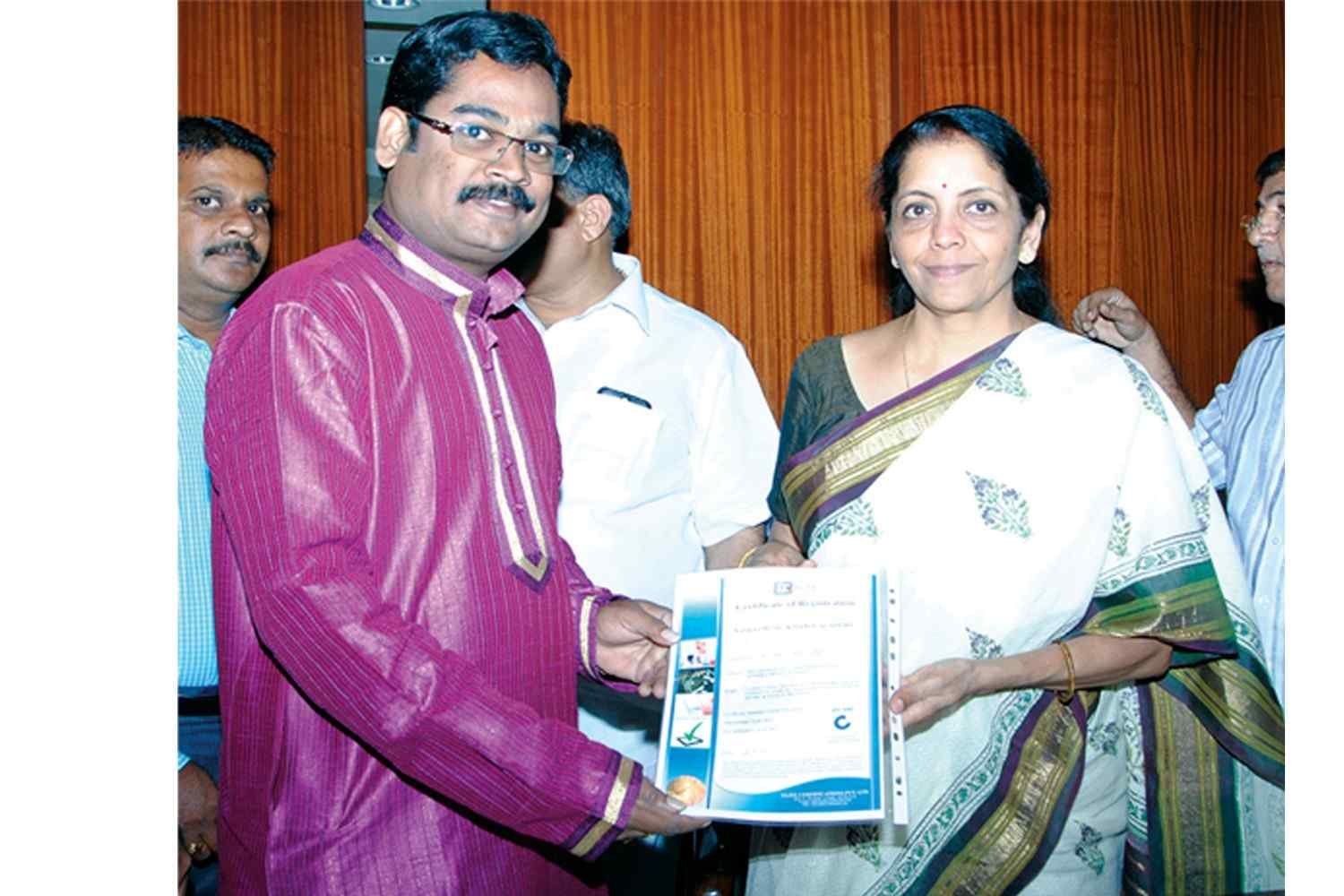
Its institutional development also included ISO certification and membership of the International Dance Council (CID) at UNESCO, according to the organisation’s published information.
Education Beyond Technique
One of the central ideas reflected in Vikram Kumar’s work is that classical dance education should not be reduced to learning physical movements.
Indian classical dance is connected with music, literature, mythology, history, philosophy, costume, stage traditions and cultural practices. A student learning Kuchipudi therefore benefits from understanding the wider cultural system in which the dance form developed.
Vikram Kumar’s own background in research, theatre and choreography has allowed him to approach dance education from multiple perspectives.
His work in thematic productions demonstrates this approach. Chenchu Lakshmi Narasimha Kalyanam, for example, combines Kuchipudi technique with traditional folk forms while presenting the story associated with Lord Narasimha of Simhachalam. The production has reportedly been staged at more than 150 venues across India.
Similarly, Swachh Ganga – Swachh Bharat uses classical dance storytelling to communicate a contemporary environmental message, drawing inspiration from Bhagiratha Vilasam.
Festivals as Extensions of Education
Vikram Kumar’s institutional vision has also extended to the creation of performance platforms.
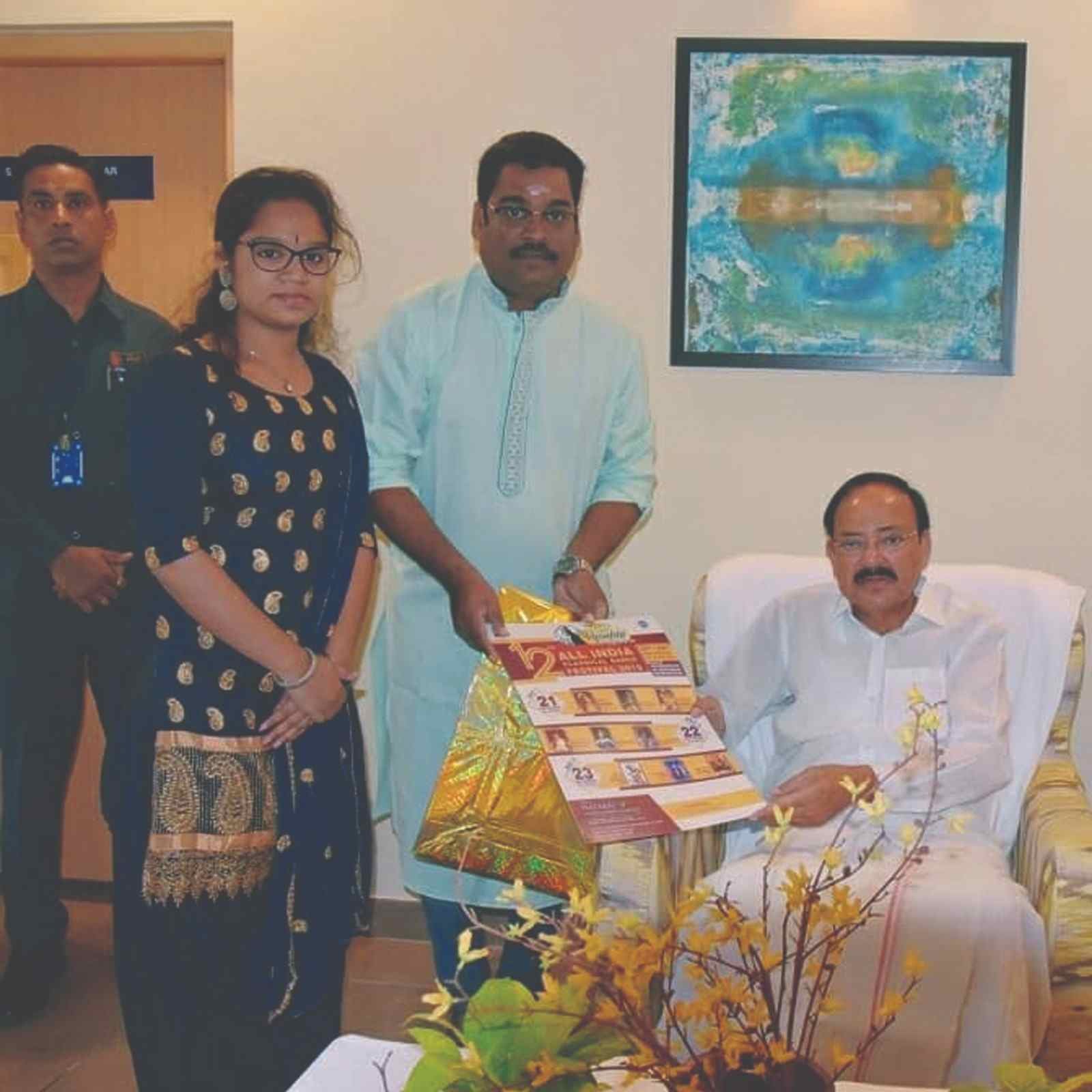
NMDA has been associated with a series of dance and cultural festivals, including Vysakhi Nrithyotsav, Bharat Nrithyotsav, Nataraj Nrithyotsav, Naatya Tharang Sangeeth Nrithyotsav, Sathyabhama Yuva Nrithyotsav, Jathis Music & Dance Festival and Amaravathi Nrithyotsav.
These initiatives provide students and young artistes with opportunities that cannot always be obtained through classroom training alone.
The Vysakhi Nrithyotsav, in particular, has brought multiple Indian classical dance traditions onto a common platform. Festival documentation records participation from different classical forms and performances by established artistes. (narthaki.com)
The Sathyabhama Yuva Nrithyotsav, launched in 2013 according to Vikram Kumar’s profile, further demonstrates his emphasis on creating platforms specifically for younger practitioners.
Creating a Professional Environment for Young Artistes
For students, performance experience is an important part of artistic development. Public performances teach discipline, stage management, coordination with musicians, costume and presentation standards, and the ability to communicate with audiences.
By organising festivals and competitions, Vikram Kumar has attempted to create an environment where students can gain such experience while interacting with senior practitioners.
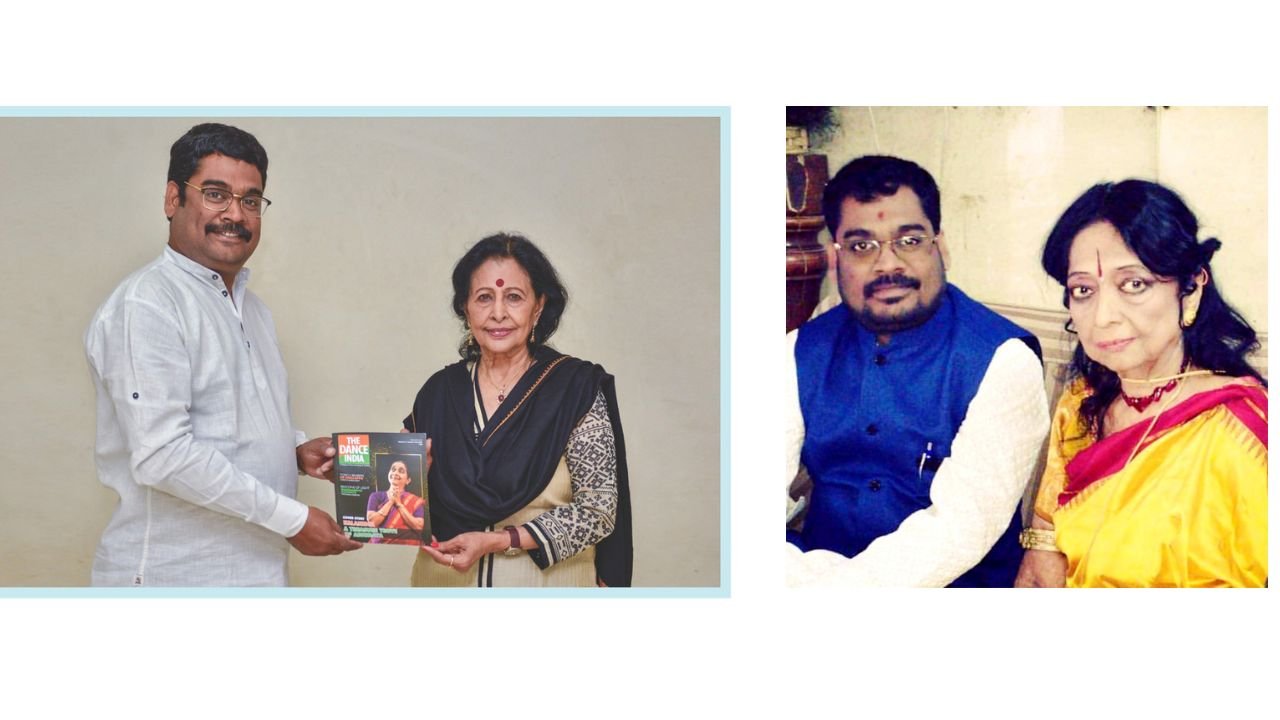
His festival platforms have brought together Padma awardees, Sangeet Natak Akademi fellows, established gurus and emerging artistes, creating opportunities for artistic exchange and mentorship.
This approach helps bridge the gap between traditional classroom learning and professional artistic practice.
Connecting Education with Preservation
Vikram Kumar’s institutional work is also connected to his broader concerns about cultural preservation.
He has emphasised that preserving classical arts means protecting the wider knowledge ecosystem around them. This includes repertoire, literature, choreography, musical traditions, gurus, practitioners, historical records and performance practices.
In the digital age, these materials can be reproduced and circulated rapidly. While technology can expand access to classical arts, it can also create challenges involving attribution, unauthorised copying and loss of original context.
His emphasis on responsible documentation and intellectual property therefore forms part of the same educational philosophy. Students and researchers need access to authentic knowledge, while creators and traditional knowledge custodians deserve proper recognition.
Building an Institutional Legacy
Vikram Kumar B R’s contribution to dance education can therefore be viewed at several levels. His own academic training provided a foundation; his involvement with Andhra University’s Department of Dance exposed him to institutional development; and the creation of NMDA allowed him to develop an independent cultural platform.
Through education, festivals, competitions, publications and cultural exchanges, his work seeks to create an environment where Indian classical arts can remain active rather than becoming merely historical subjects.
The larger objective is continuity. An institution can provide teachers, students, performers and audiences with a common platform, while festivals can create opportunities for performance and exchange.
For Vikram Kumar, institutional development appears to be an essential part of preserving tradition. When artistic knowledge is supported by education, documentation and organised cultural platforms, it has a stronger possibility of reaching future generations in an authentic and meaningful form.