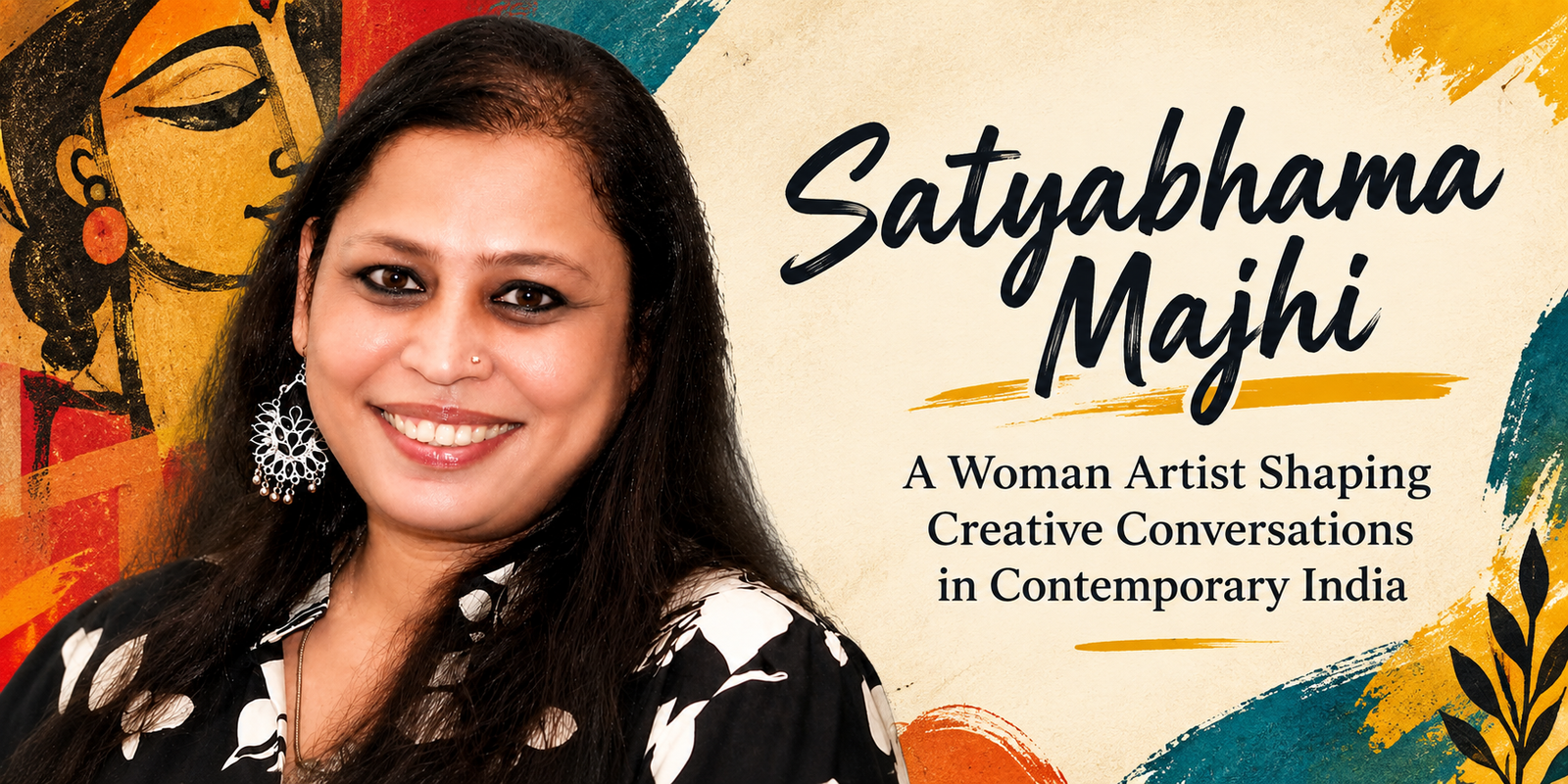
Satyabhama Majhi: Painting Urban Life, Memory and Social Change
Cities are constantly changing. Streets become wider, old buildings disappear, new structures emerge, markets transform and familiar neighbourhoods gradually acquire a different character. For artist Satyabhama Majhi, these changes are not merely signs of urban development. They are also subjects of memory, observation and artistic reflection.
Based in Bhubaneswar, Odisha, Majhi has developed a multidisciplinary contemporary art practice involving painting, sculpture, installation, photography, mixed media, public art and community-based projects. Among the recurring concerns within her work are urban transformation, everyday life, cultural memory and the relationship between people and their changing environments.
Her artistic engagement with the city demonstrates how ordinary scenes can become important visual records of social experience.
The City as an Artistic Subject
Urban life provides artists with an enormous range of subjects.
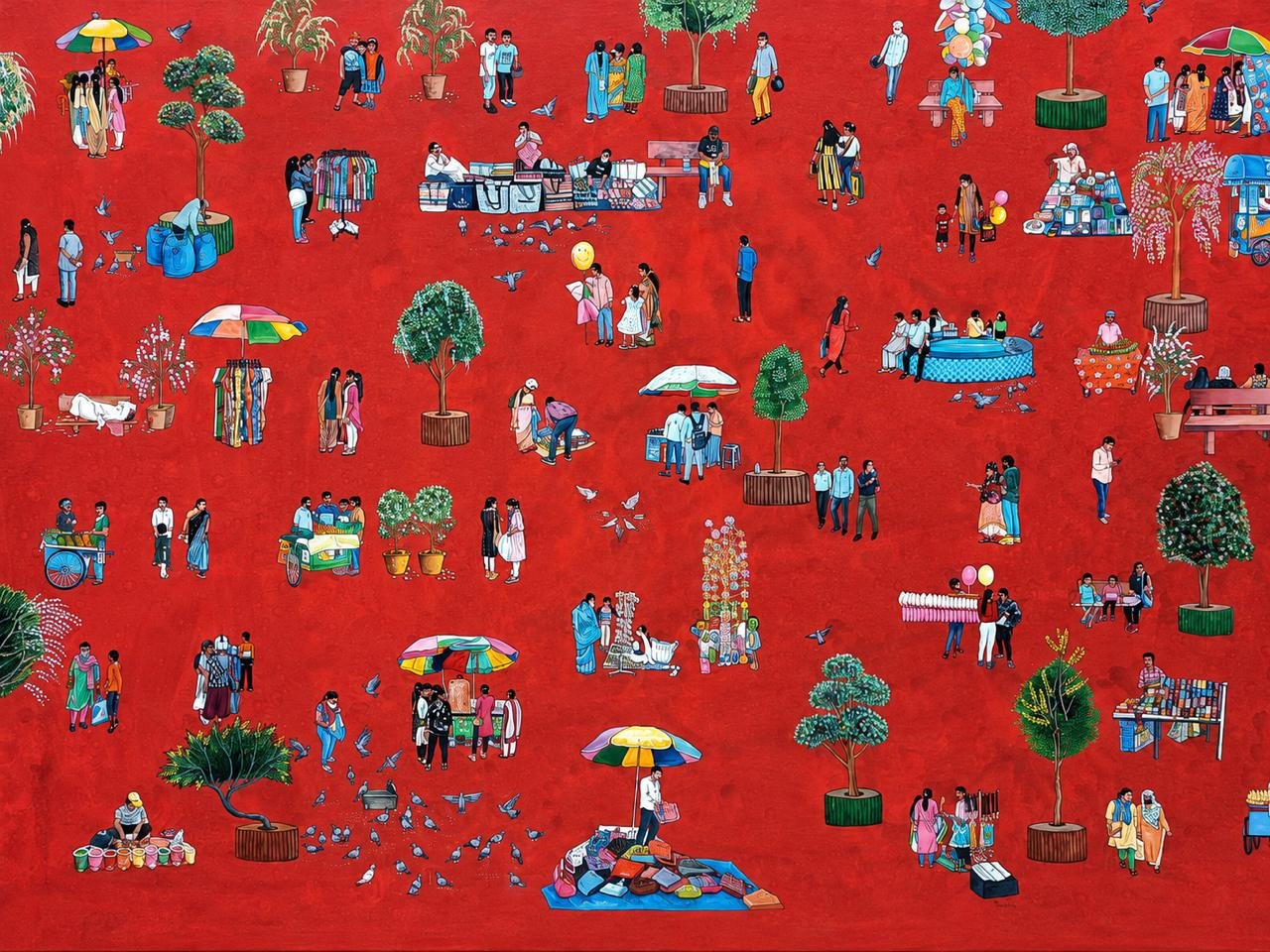
People move through streets, vendors conduct business, animals share spaces with humans, buildings change, vegetation survives alongside construction and communities create their own patterns of daily life.
Majhi’s paintings frequently draw attention to these kinds of environments.
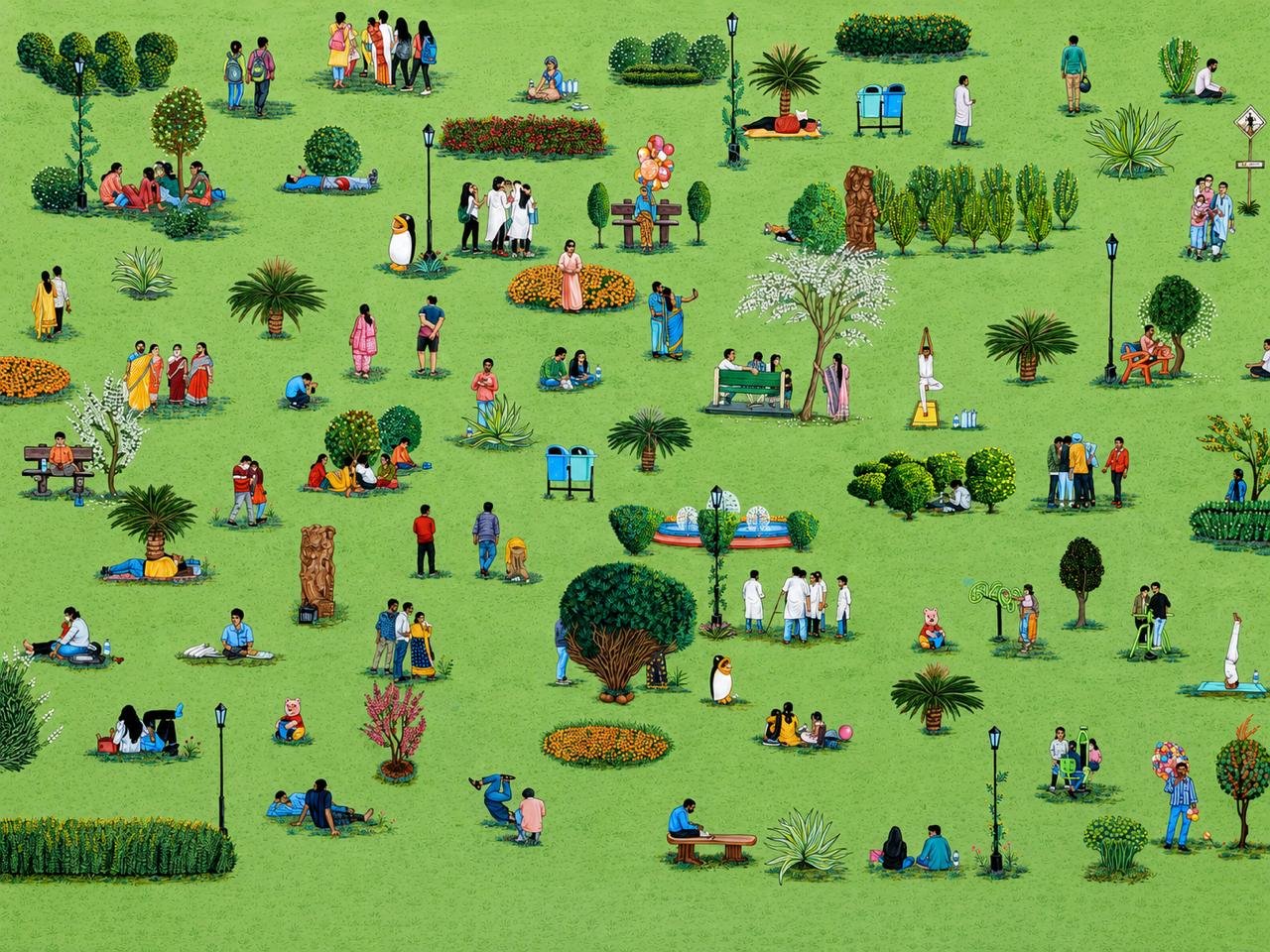
Her work includes figures, animals, plants, vendors, architectural fragments and collective activities. Rather than presenting the city only as a collection of buildings, she approaches it as a living social environment.
The people who occupy urban spaces become as important as the physical structures around them.
Everyday Life as Visual History
A major characteristic of Majhi’s approach is her attention to everyday experiences.
A market scene or neighbourhood activity may appear ordinary when experienced in the moment. Yet such scenes can become important memories when a place changes.
This idea of everyday life as cultural memory has influenced Majhi’s artistic enquiry.
Her early observations of life around her father’s shop in a local market in Bhubaneswar exposed her to buying and selling, seasonal celebrations, neighbourhood relationships, animals and the changing environment around the market.
These experiences contributed to her interest in cultural and behavioural patterns.
Memories of a Changing Bhubaneswar
Bhubaneswar became an important context for Majhi’s artistic observations.
As the city developed and modernised, familiar environments changed.
Urban development can bring new opportunities and infrastructure, but it can also alter neighbourhood identities and replace older visual memories.
For an artist, such transformation creates questions.
What happens to the memories associated with a place after its physical appearance changes?
How do people adapt when familiar surroundings disappear?
What aspects of cultural identity survive urban transformation?
Majhi’s artistic practice engages with these questions through visual observation.
People at the Centre of Urban Landscapes
Majhi’s urban paintings often place people within the environment rather than treating them as secondary elements.
Figures may be shown walking, waiting, selling, resting, celebrating or interacting.
This creates a sense of collective urban life.
The city becomes a network of human relationships.
A vendor is connected to customers. A pedestrian shares space with vehicles and buildings. A neighbourhood contains generations of memories. Animals and vegetation occupy spaces alongside human activity.
Through such relationships, Majhi’s work presents urban life as something constantly negotiated between people and their surroundings.
Painting as Observation
Majhi’s paintings demonstrate the importance of observation in her artistic process.
Instead of relying solely on imagination, she draws from experiences of places and communities.
Observation allows small details of everyday life to enter the artistic process.
People’s activities, vegetation, animals, buildings and patterns of movement can become visual material.
The resulting artwork can therefore operate at two levels: it can be visually engaging while also encouraging viewers to think about the environments they themselves inhabit.
Urban Change and Cultural Identity
Modernisation can create tension between continuity and change.
Cities grow, but cultural memories remain.
Old neighbourhoods may disappear physically while continuing to exist in people’s memories. Traditional activities may change but retain elements of their original identity.
This relationship between development and cultural continuity is important to Majhi’s work.
Her artistic practice considers how cultural memory survives within changing environments.
The city becomes a place where different periods of history exist simultaneously.
Geometry Within Urban Narratives
Majhi’s visual language is not limited to realistic representation.
Her paintings and mixed-media works also incorporate geometric forms and repeated structures.
Works on paper from 2021–22, for example, include triangular forms alongside people, animals, plants and domestic environments.
These forms can create visual rhythm and structure.
Geometry allows the artist to organise complex scenes while also introducing symbolic associations.
Her broader artistic vocabulary combines narrative figuration with geometric elements, regional references and ecological imagery.
Repetition and Collective Experience
Repeated figures and activities can also create a sense of collective experience.
Instead of focusing on a single individual, an artwork may communicate the presence of a larger group.
This is particularly effective when exploring urban environments, where individual lives constantly intersect.
People may perform similar activities every day, yet each person’s experience is different.
Repetition in visual art can therefore suggest both routine and diversity.
It reflects the patterns through which cities function.
The Relationship Between People and Nature
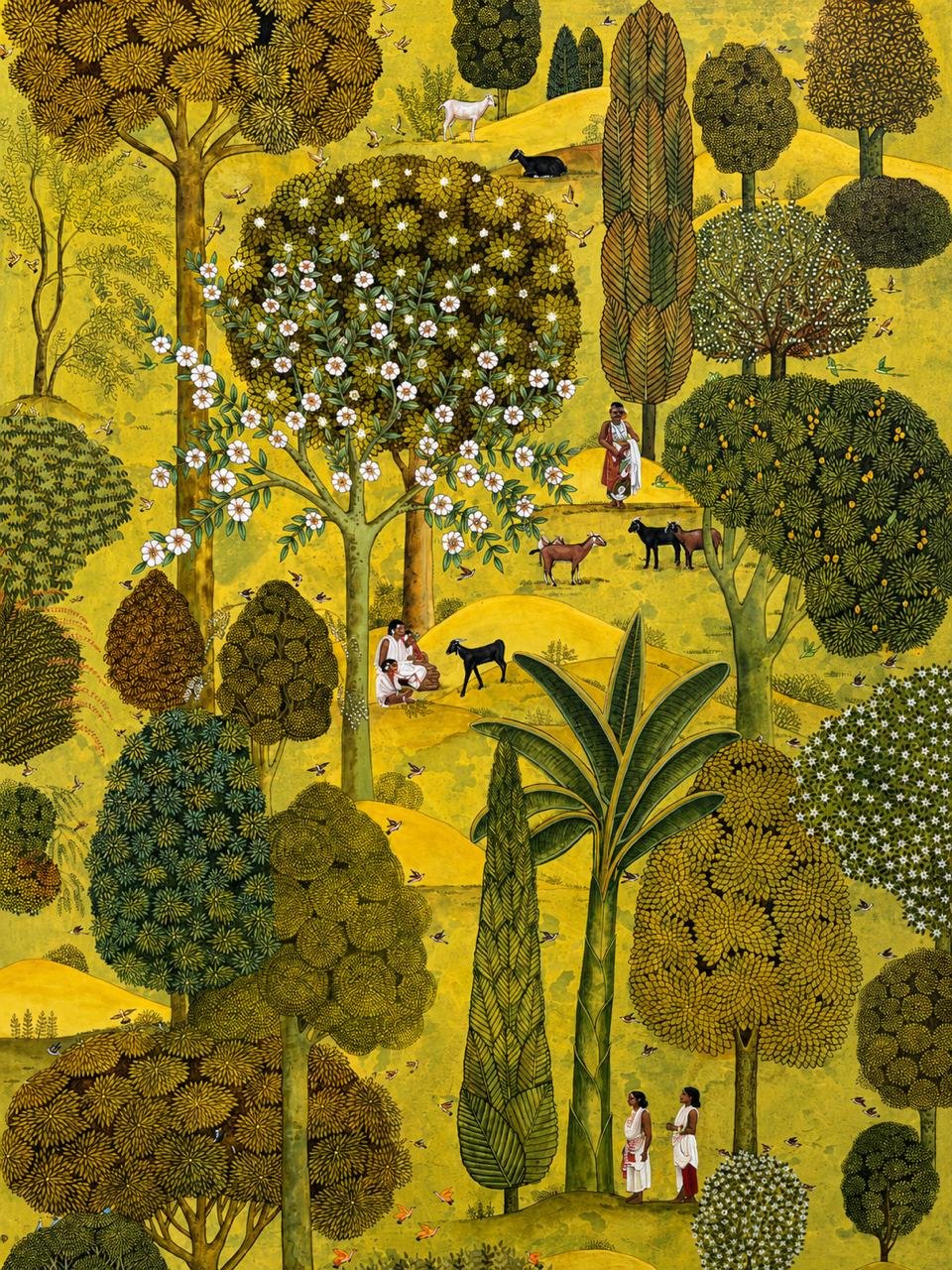
Although urban life is an important concern, Majhi’s work does not separate cities from nature.
Vegetation, animals and natural imagery frequently appear alongside human figures and built environments.
This combination reflects the reality of Indian cities, where natural and constructed spaces often exist side by side.
Trees may survive between buildings. Animals move through neighbourhoods. Seasonal changes affect everyday activities.
Such imagery can encourage viewers to consider the ecological dimension of urban development.
From Urban Space to Public Art
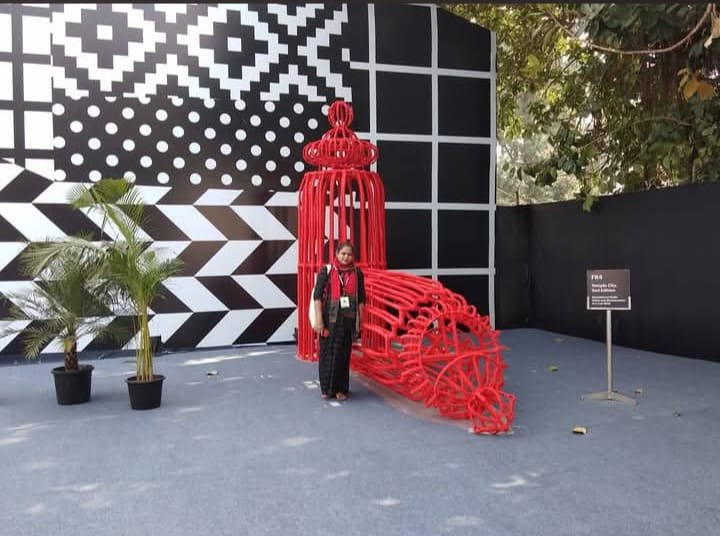
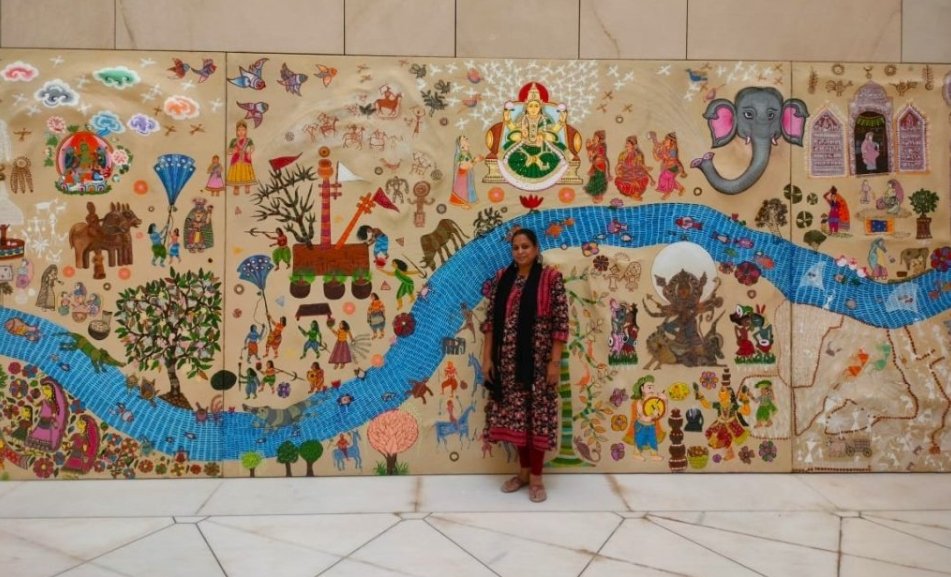
Majhi’s interest in public spaces extends naturally into her public-art practice.
She has contributed to murals and public-art interventions in Cuttack and Bhubaneswar.
Public walls and neighbourhood spaces provide opportunities to transform ordinary surroundings through visual expression.
Her public-art projects have included work connected with major sporting and cultural events, including the Men’s FIH Hockey World Cup and Asian athletics events.
In such settings, art becomes part of everyday urban experience.
The Public Wall as a Cultural Surface
A wall in a city can carry advertisements, political messages, signs, graffiti and layers of weathered history.
When an artist transforms such a surface, it becomes another kind of cultural document.
Majhi’s involvement in public art reflects this possibility.
Public artwork can communicate with audiences who may never visit a conventional gallery.
It can also make local spaces visually meaningful by connecting them with stories, symbols and community experiences.
Urban and Rural Perspectives
Majhi’s practice is particularly interesting because her artistic interests extend beyond urban environments.
Her engagement with the Dongaria Kondh community and Niyamgiri introduces a different relationship between people and place.
Urban life often involves rapid construction, movement and modernisation.
The Niyamgiri context brings attention to landscape, indigenous knowledge, livelihood, spirituality and ecological relationships.
Placing these experiences within the same artistic practice allows Majhi to explore different forms of human interaction with environment.
Material and Memory
Her experiments with natural pigments also connect artistic material with place.
Materials such as charcoal, turmeric, geru soil, chalk stone and brown stone can become sources of colour.
This approach creates an interesting contrast with modern urban environments.
The materials connect art with the natural landscape, while the themes can address contemporary life and social change.
In this way, material itself can become part of the conversation between tradition, environment and modernity.
Art as a Record of Transformation
Majhi’s work can be viewed as a form of visual reflection on transformation.
She does not simply document a city photographically.
Instead, she interprets what she observes through colour, composition, figures, geometric forms, cultural references and mixed media.
The result is not a literal record of urban development.
It is a record of how changing environments can be experienced emotionally and culturally.
Memory Beyond Buildings
When people think about a city, they often remember buildings and roads.
But memories can also involve sounds, markets, festivals, familiar faces, animals, trees and everyday routines.
These less visible aspects of urban life can be lost when environments change.
Majhi’s attention to ordinary activities gives such experiences a place within contemporary visual culture.
Her art suggests that cultural memory can exist in small everyday details.
Contemporary Art and Social Observation
This makes Majhi’s urban practice part of a wider contemporary artistic concern with social observation.
Contemporary artists often investigate issues that traditional genres may have treated separately: identity, environment, migration, urbanisation, cultural change and collective memory.
Majhi approaches these themes through a visual language grounded in people and places.
Her multidisciplinary practice allows her to move between painting, public art, community projects and other forms of visual expression.
Connecting Personal Memory with Collective Experience
One of the strengths of this approach is its ability to connect personal memories with broader social experience.
A childhood observation of a market can become a reflection on urbanisation.
A familiar neighbourhood can become a meditation on cultural continuity.
An everyday figure can represent a larger community.
A changing landscape can raise questions about identity.
Through these connections, private observation can become part of a wider contemporary artistic narrative.
A Broader Understanding of Urban Art
Majhi’s work demonstrates that urban art does not have to focus exclusively on architecture or modern infrastructure.
It can also examine relationships.
The relationship between vendors and markets.
Between residents and neighbourhoods.
Between people and animals.
Between natural vegetation and construction.
Between memories of the past and expectations of the future.
This broader perspective makes urban life a complex cultural subject rather than simply a visual backdrop.
Continuing the Conversation
Majhi’s career continues to connect studio practice with public and community engagement.
Her work across exhibitions, residencies, educational initiatives and public-art projects provides different ways of exploring the relationship between people and their environments.
Whether working on canvas, paper, a public wall or a community project, her practice repeatedly returns to observation and interaction.
This continuity gives different parts of her career a common foundation.
Conclusion
Satyabhama Majhi’s artistic engagement with urban life demonstrates how contemporary painting can become a reflection on memory and social change.
Her observations of Bhubaneswar, interest in everyday people and activities, representations of changing environments and public-art interventions all contribute to an artistic language concerned with the relationship between place and identity.
Her work reminds viewers that cities are not made only of buildings and roads. They are made of memories, communities, routines, relationships and landscapes.
As urban environments continue to change, artists such as Majhi provide another way of seeing that transformation.
Her paintings and multidisciplinary projects encourage audiences to look more closely at ordinary surroundings and recognise the cultural stories embedded within them.
In this sense, Satyabhama Majhi’s art becomes not only an interpretation of contemporary urban life, but also a meditation on what cities remember, what they lose and what they continue to carry into the future.